



CB1 Agonist
-
Anandamide
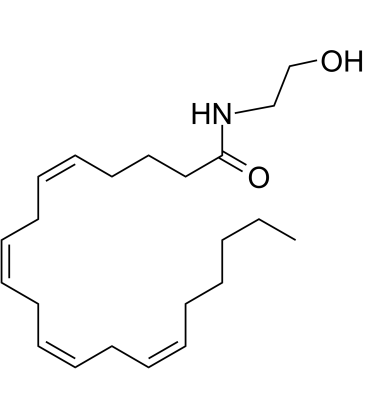 0 ImagesSynonyms: AEA; Arachidonoyl ethanolamide
Anandamide is an endocannabinoid. Anandamide modulates both neuronal and immune functions through two protein-coupled cannabinoid receptors (CB1 and CB2). Anandamide can activate numerous other receptors like PPARS, TRPV1, and GPR18/GPR55. Anandamide also has potential anti-fungal and anti-inflammatory activities. Anandamide can be used for the research of Alzheimer’s disease (AD) and ulcerative colitis.
-
Leelamine
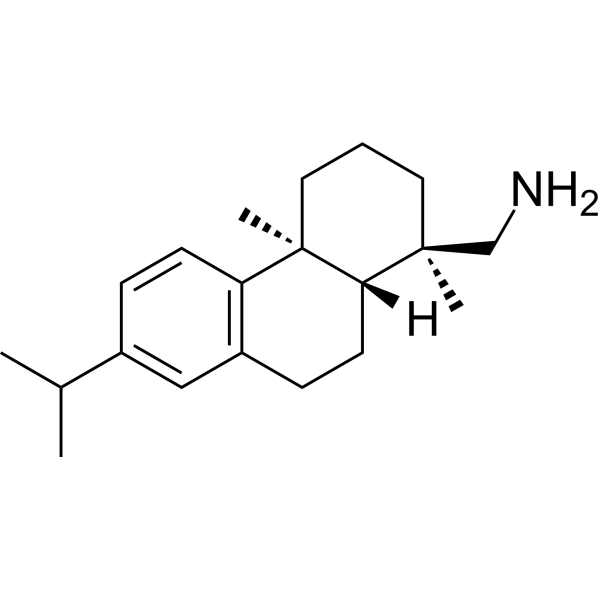 0 ImagesCat. No.: HY-W005629CAS No.: 1446-61-3
Leelamine is an orally active pyruvate dehydrogenase kinase (PDK) inhibitor with an IC50 value of 9.5 μM, showing a blood glucose lowering effect in the diabetic mouse. Leelamine is also a weak agonist of cannabinoid receptors CB1 and CB2. Leelamine decreases mitotic activity, prostate-specific antigen expression and induces Apoptosis to cell death in cancer cells.
-
Leelamine hydrochloride
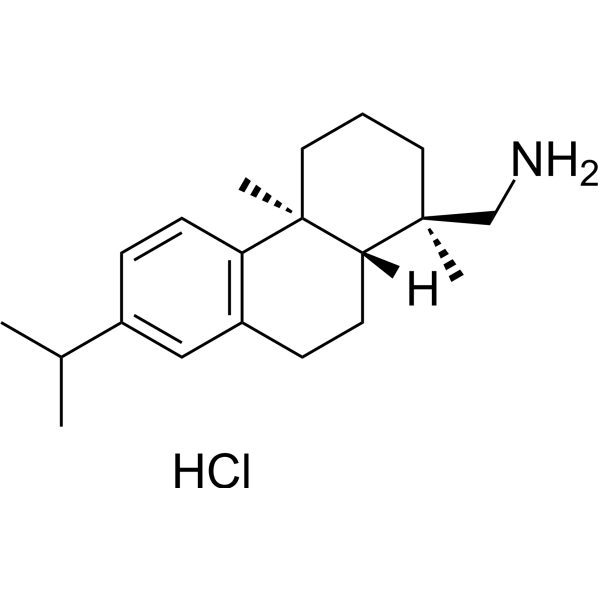 0 Images
Leelamine hydrochloride is an orally active weakly basic amine that inhibits NPC1 and the androgen receptor AR-V7, and acts as a cannabinoid receptor agonist. Leelamine hydrochloride also functions as a lysosome affinity agent that blocks endocytosis, disrupts autophagic flux and cholesterol transport, thereby altering the RTK-AKT/STAT/MAPK signaling cascade. Leelamine hydrochloride induces cancer cell death and autophagosome accumulation, and can be used in research related to melanoma, castration-resistant prostate cancer and breast cancer.
-
Synaptamide
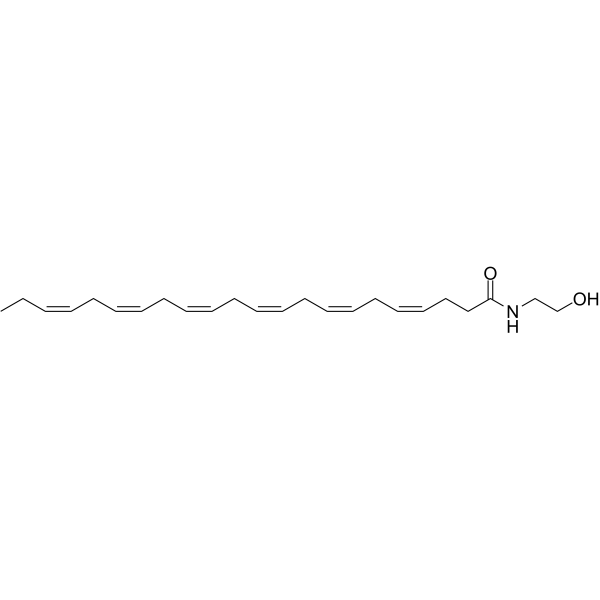 0 ImagesSynonyms: N-Docosahexaenoyl ethanolamine (DHEA); Docosahexaenoyl ethanolamide
Synaptamide (Dehydroepiandrosteron; DHEA) is an endogenous metabolite and structural analogue of Anandamide. Synaptamide binds to both the cannabinoid-1 and 2 (CB1 and CB2) cannabinoid receptors and has anti-inflammatory properties. Synaptamide is the first small-molecule endogenous ligand of an adhesion G protein-coupled receptor (aGPCR) .
-
Tetrahydromagnolol
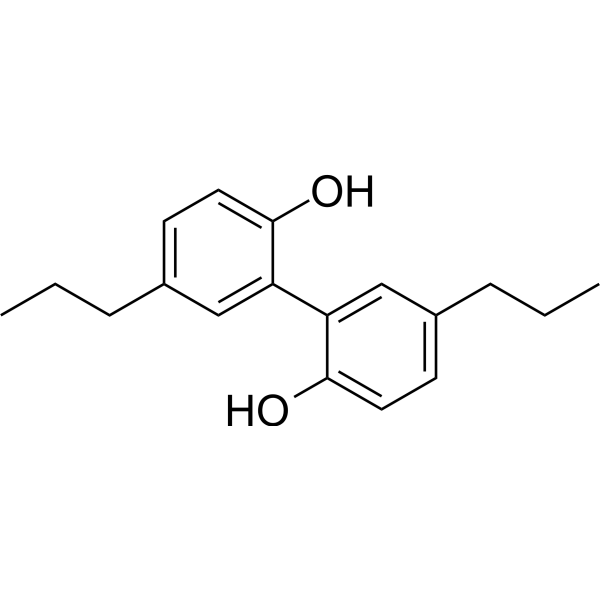 0 ImagesSynonyms: Magnolignan
Tetrahydromagnolol (Magnolignan), the main metabolite of Magnolol, is a potent and selective cannabinoidCB2 receptor agonist (EC50 =170 nM) and GPR55 antagonist. The Ki of Tetrahydromagnolol for CB2 is 416 nM, 20-fold higher than for the CB1 receptor. Magnolol shows antifungal, anti-inflammatory and analgesic effects.
-
GW-405833
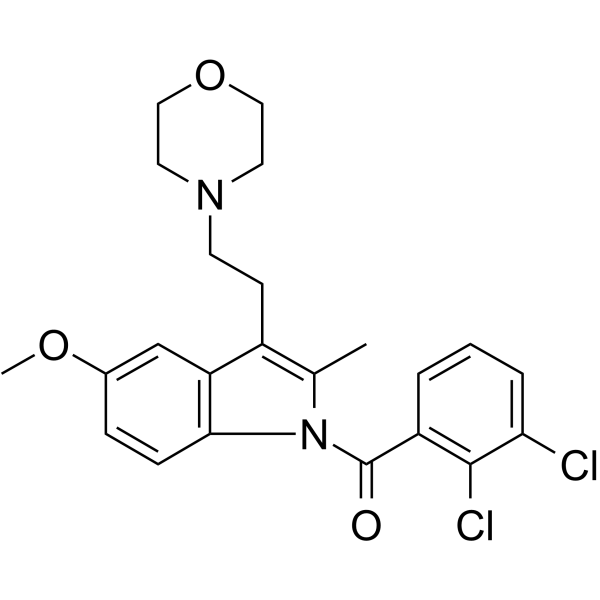 0 ImagesSynonyms: L768242
GW-405833 (L768242) is a potent, selective cannabinoid receptor 2 (CB2) agonist. GW405833 has EC50 and Ki values of 0.65 nM and 3.92 nM for CB2, and EC50 and Ki values of 16.1 μM and 4772 nM for CB1. GW-405833 also exhibits non-competitive CB1 antagonist, exerting its analgesic and and anti-inflammatory effect through a CB1 receptor (rather than CB2) dependent mechanism. GW-405833 can significantly inhibit the production of cAMP stimulated by Forskolin (HY-15371). GW405833 inhibits glycolysis by down-regulating HIF-1α, thereby alleviating acute liver failure (ALF).
-
CB1/2 agonist 3
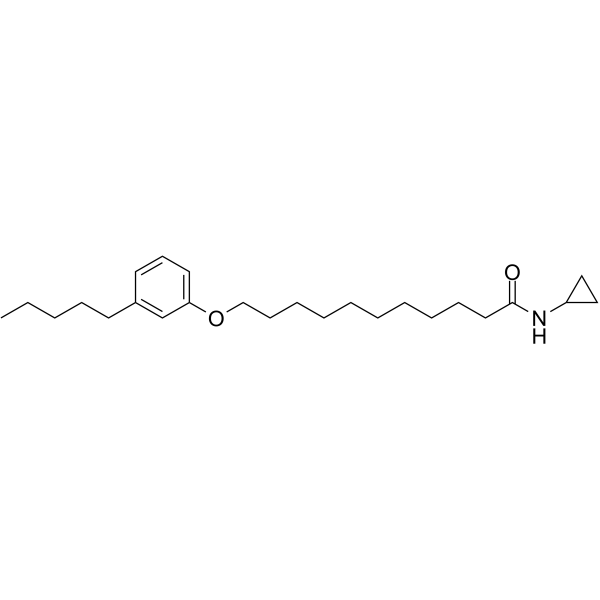 0 Images
CB1/2 agonist 3 (compound 52), a potent non-selective cannabinoid ligand, is a CB1/CB2 (cannabinoid receptor) competitive agonist. CB1/2 agonist 3 acts on hCB1 and hCB2 with Ki values of 5.9 nM and 3.5 nM, respectively.
-
N-Arachidonyldopamine
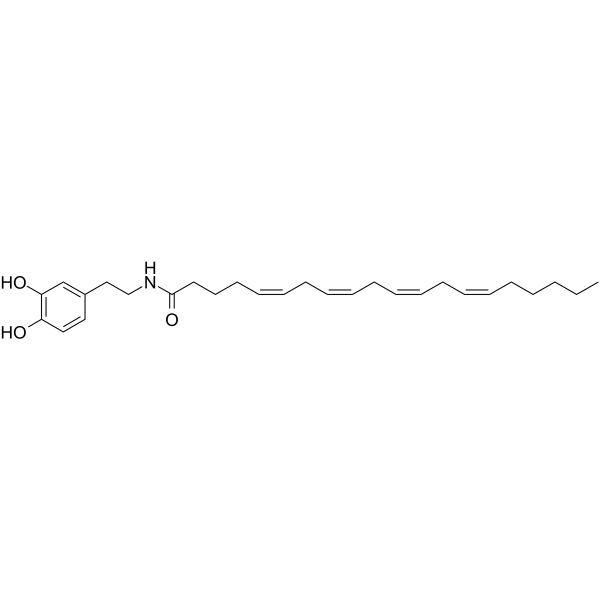 0 Images
N-Arachidonyldopamine acts as an Anandamide (HY-10863) membrane transport inhibitor, a selective CB1 cannabinoid receptor agonist, and a VR1 receptor activator. It exhibits an EC50 value of 48 nM for rat VR1 and a Ki value of 0.25 μM for CB1. N-Arachidonyldopamine exists in mammalian neural tissues. It stimulates intracellular Ca2+ mobilization, mediates cannabinoid-like effects, and induces hypothermia, hypomotility, catalepsy, analgesia, and hyperalgesia to heat. N-Arachidonyldopamine possesses anticancer activity against breast cancer. It can be used in research related to breast cancer and heat hyperalgesia.
-
GW405833 hydrochloride
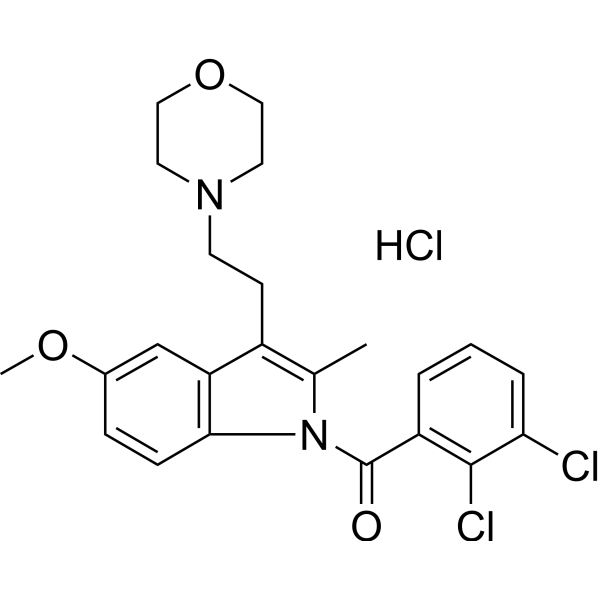 0 ImagesSynonyms: L768242 hydrochloride
GW405833 (L768242) hydrochloride is a potent, selective cannabinoid receptor 2 (CB2) agonist. GW405833 has EC50 and Ki values of 0.65 nM and 3.92 nM for CB2, and EC50 and Ki values of 16.1 μM and 4772 nM for CB1. GW405833 hydrochloride also exhibits non-competitive CB1 antagonist, exerting its analgesic effect through a CB1 receptor (rather than CB2) dependent mechanism. GW405833 hydrochloride can significantly inhibit the production of cAMP stimulated by Forskolin (HY-15371). GW405833 hydrochloride inhibits glycolysis by down-regulating HIF-1α, thereby alleviating acute liver failure (ALF).
-
(R)-Methanandamide
 0 ImagesCat. No.: HY-101389CAS No.: 157182-49-5Synonyms: AM-356
-
Eicosapentaenoyl ethanolamide
 0 Images
Eicosapentaenoyl ethanolamide, an omega-3 fatty acid, is one of N-acylethanolamines (NAEs). Eicosapentaenoyl ethanolamide is cannabinoid CB1/CB2 receptor agonist. Eicosapentaenoyl ethanolamide acts as a metabolic signal. Eicosapentaenoyl ethanolamide inhibits dietary restriction (DR)-induced lifespan extension in wild type animals and suppresses lifespan extension in a TOR pathway mutant.
-
CB1/2 agonist 1
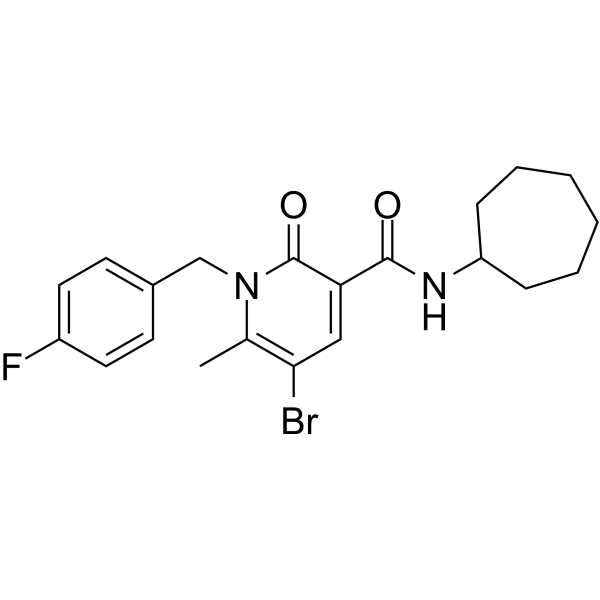 0 Images
CB1/2 agonist 1 is a potent and cross the blood-brain barrier CB1/2 agonist with EC50s of 56.15, 11.63 nM for CB1R and CB2R, respectively. CB1/2 agonist 1 reduces glutamate release and LPS-induced activation of microglial cells. CB1/2 agonist 1 shows anti-inflammatory and antinociceptive effects. CB1/2 agonist 1 has the potential for the research of multiple sclerosis.
-
Dihomo-γ-Linolenoyl Ethanolamide
 0 Images
Dihomo-γ-Linolenoyl Ethanolamide, an endocannabinoid, is a cannabinoid (CB) receptor agonist with Kis of 857 nM and 598 nM for human recombinant CB1 and CB2 receptors, respectively.
-
Arvanil
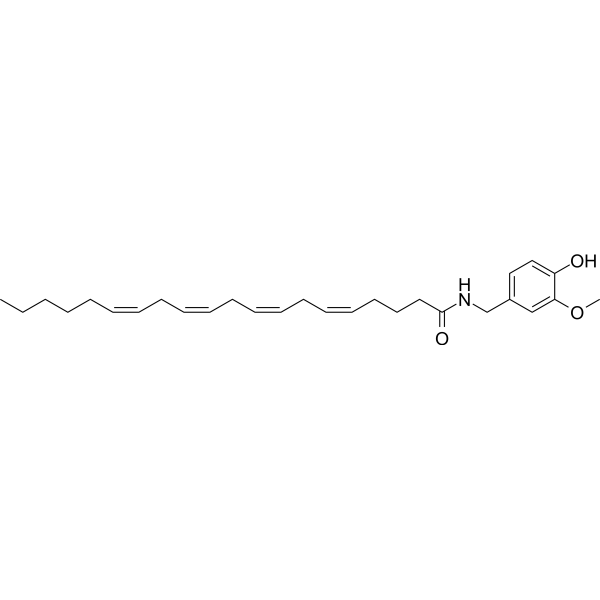 0 ImagesSynonyms: N-Vanillylarachidonamide
Arvanil (N-Vanillylarachidonamide) is a mixed agonist of CB1 and TRPV1 receptors. Arvanil downregulates CD25, HLA-DR, CD134/OX40, blocks G1/S phase transition, and induces phosphorylation of Akt. Arvanil does not induce apoptosis in cells. Arvanil inhibits lymphocyte activation and ameliorates autoimmune encephalomyelitis. Arvanil can be used in research related to Huntington's disease, vomiting, and multiple sclerosis.
-
CB1 inverse agonist 2
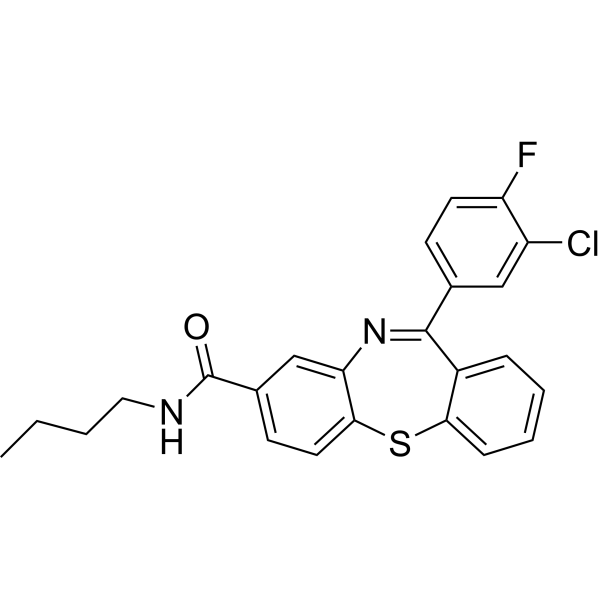 0 Images
CB1 inverse agonist 2 is an orally active inverse agonist of Cannabinoid Receptor CB1. CB1 inverse agonist 2 effectively inhibits CP55940-induced hypothermia and anorexia in mice model.
-
AZD1940
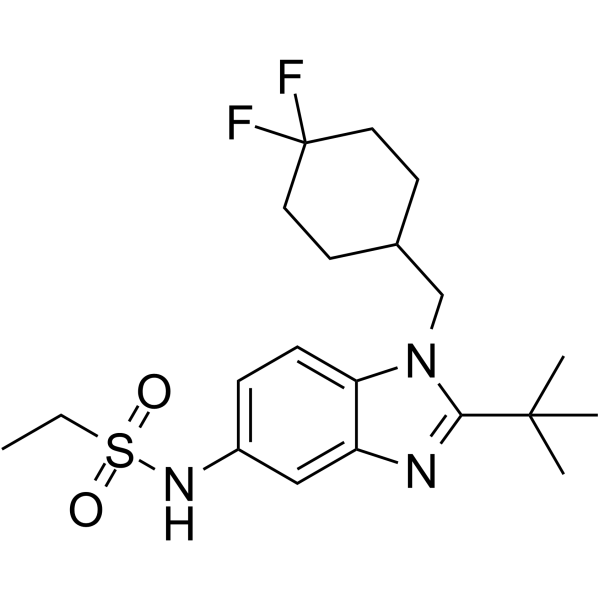 0 Images
AZD1940 is an orally active, high affinity cannabinoid CB1/CB2 receptor agonist with pKi values of 7.93 and 9.06 for human CB1R and CB2R, respectively. AZD1940 shows a robust analgesia action.
-
2-Palmitoylglycerol
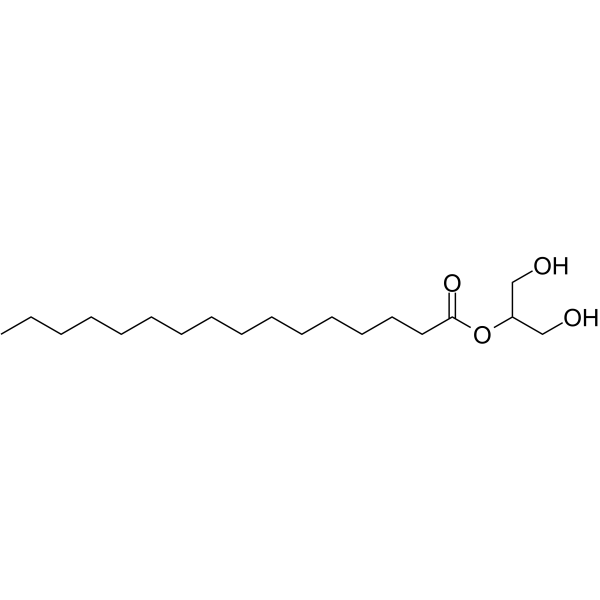 0 ImagesSynonyms: 2-Palm-Gl
2-Palmitoylglycerol (2-Palm-Gl), an congener of 2-arachidonoylglycerol (2-AG), is a modest cannabinoid receptor CB1 agonist. 2-Palmitoylglycerol also may be an endogenous ligand for GPR119.
-
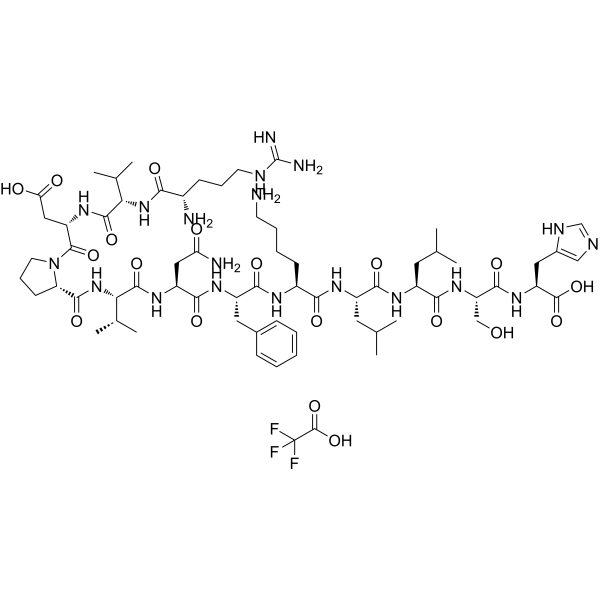
L759633
 0 Images
L759633 is a potent and selective agonist of cannabinoid receptor (CB2) receptor, with Kis of 6.4 nM and 1043 nM for CB2 and CB1 receptors, respectively. L759633 can inhibit Forskolin-stimulated cAMP production.
-
Bay 59-3074
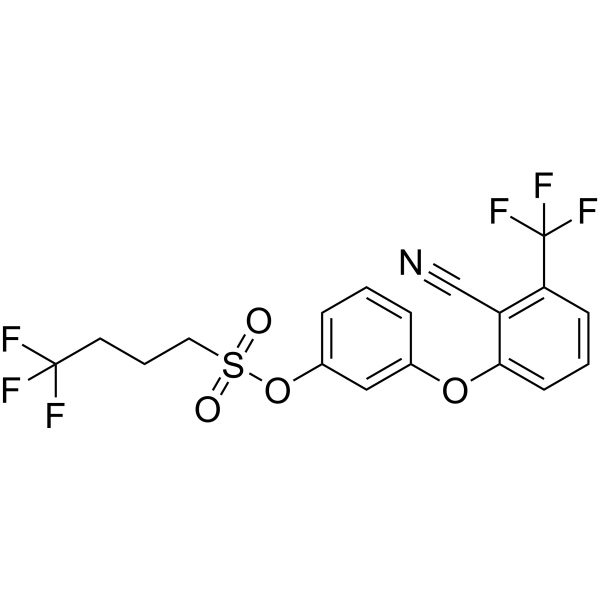 0 Images
Bay 59-3074 is a selective cannabinoid CB1/CB2 receptor partial agonist with Ki values of 48.3 and 45.5 nM at human CB1 and CB2 receptors, respectively. Bay 59-3074 has analgesic properties.



